Purse Web Spider: Britain’s Tarantula

Meet our amazing mygalomorph, discover its life cycle and learn how to find it

The scarce Purse Web Spider (Atypus affinis) is rarely seen because it spends the majority of its life underground in a sock-shaped tube. In the UK it has the honour of being our only member of the mygalomorph family, which elsewhere includes tarantulas.

Male Purse Web Spider (Atypus affinis) on heathland. Dorset, UK.

Purse Web Spiders normally lead a solitary existence in a silk-lined burrow. The top portion of this tube extends above ground and is extremely well camouflaged with its surroundings, covered with bits of vegetation and debris. Most of the time this tube is completely sealed.

Camouflaged web of Purse Web Spider (Atypus affinis) on heathland. Surrey, UK.
Female Purse Web Spider (Atypus affinis) female in tube web. Sussex, UK.

When the Purse Web Spider’s prey makes contact with the exposed section of burrow the spider senses its vibrations and bites through the silk with its huge fangs. These distinctive downward-facing ‘chelicerae’ are shared with its larger, more exotic, arachnid ancestors. The fangs of more modern spiders cross over.

Male Purse Web Spider (Atypus affinis) on heathland. Dorset, UK.

In spring and autumn each year male Purse Web Spiders leave their burrows to go wandering in search of females. This is when you are most likely to find an adult spider. If successful in his quest he tears an entrance in her silk tube and, after mating, the pair will live here together for a while.

In early spring each year juvenile Purse Web Spiders exit the nest burrow and climb surrounding vegetation. They weave thick lines of silk to aid dispersal, and build tent-like structures around which they initially congregate.

Purse Web spiderlings (Atypus affinis) dispersing. Surrey, UK.
Purse Web spiderlings (Atypus affinis) create silk rigging. Surrey, UK.

Locating this silk rigging is a good indication that an adult’s burrow is nearby. Look out for it at the top of low gorse or heather on heathland in the south of England from mid-March. This species can also be found on chalk grassland.

Silk tents constructed by Purse Web spiderlings (Atypus affinis) on heathland. Surrey, UK.

In the aftermath of heath fires, discarded sections of Purse Web tubes become more visible. Heat damages the surface layer of camouflage, exposing brighter silk beneath.
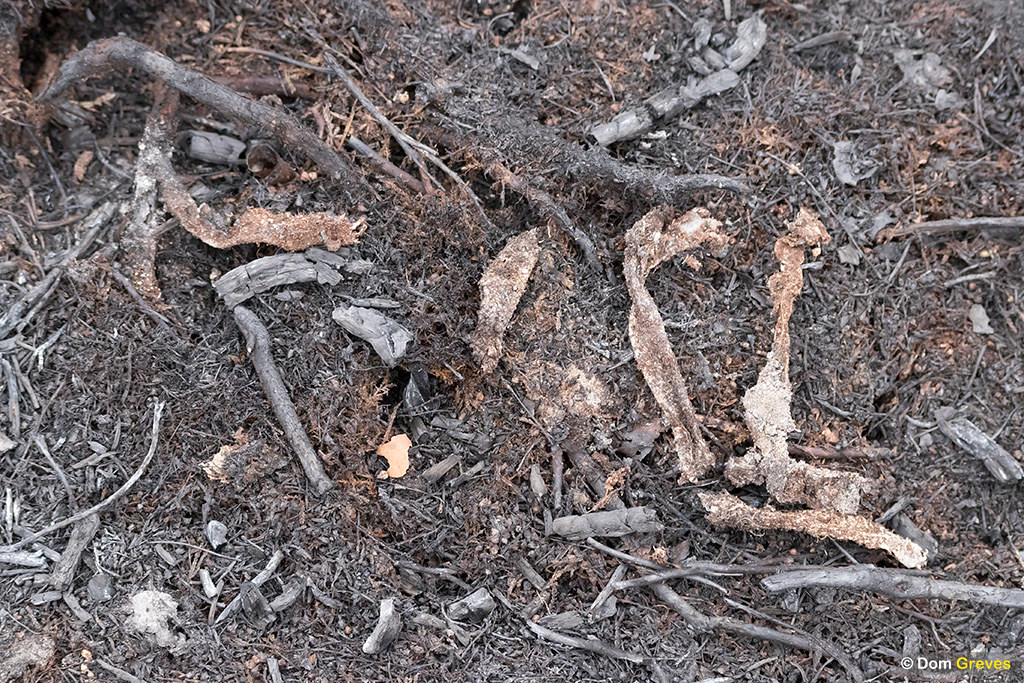
Discarded Purse Web Spider (Atypus affinis) tube webs on burnt heathland. Surrey, UK.
Discarded Purse Web Spider (Atypus affinis) tube webs recovered from burnt heathland. Surrey, UK.

The Purse Web Spider is classified as Nationally Scarce and is Amber Listed. Although it remains widespread, the species has undergone substantial decline. However there is limited data available and so the British Arachnological Society (BAS) has launched a new Purse Web Spider Recording Scheme using iRecord. If you find one of these amazing creatures please be sure to let them know!

Find out more

Purbeck Mason Wasp

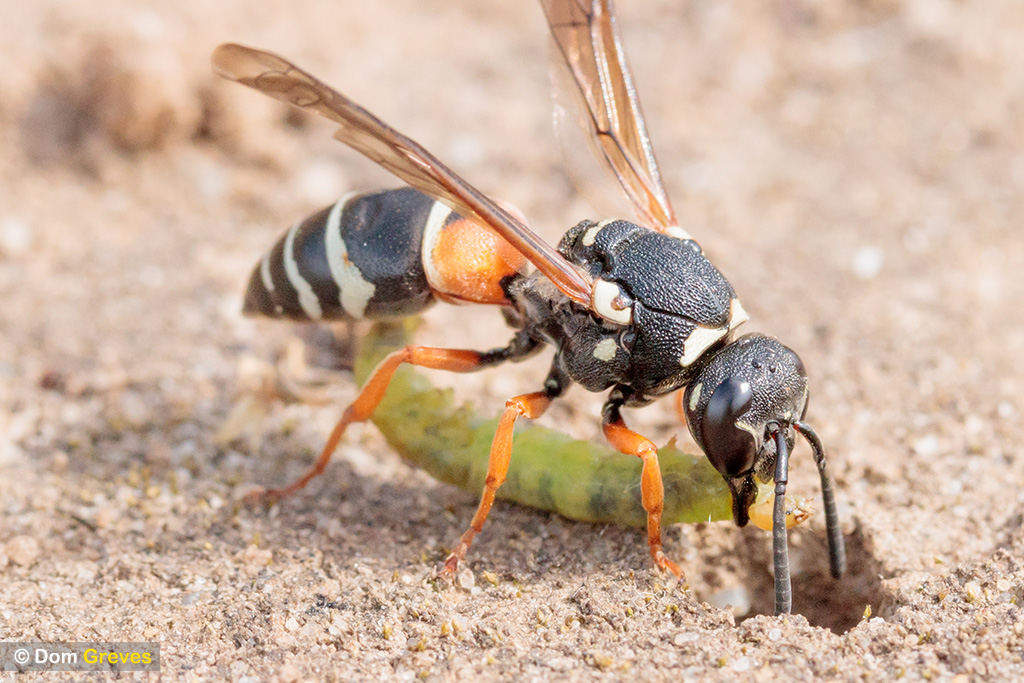
In the UK the rare Purbeck mason wasp (Pseudepipona herrichii) is found only in the Isle of Purbeck, Dorset.

The female excavates a nest burrow in bare ground on heathland and later seals it with moistened clay.

Wasp with excavated soil

Purbeck mason wasp (Pseudepipona herrichii) excavating nest burrow on heathland. Dorset, UK.

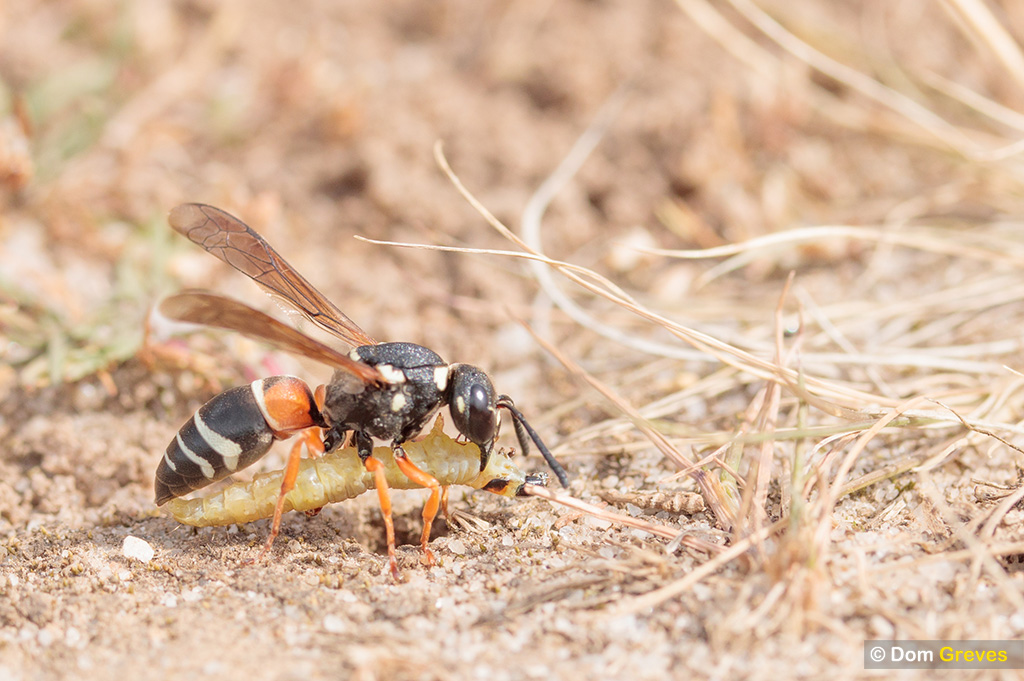
She stocks her burrow with the larvae of a small moth which feeds mainly on bell heather.

Purbeck mason wasp: prey

Purbeck mason wasp (Pseudepipona herrichii) with Acleris hyemana moth larva prey at nest burrow entrance. Dorset, UK.

The adults chew distinctive holes in the heather flowers to obtain nectar which their short tongues could not otherwise reach.

Wasp drinking from heather

Purbeck mason wasp male nectaring on bell heather. Dorset, UK.

The Purbeck mason wasp is thought to rely solely on the larvae of Acleris hyemna, but in 2017 I photographed this female provisioning her nest with what appears to be the moth Acleris notana.

Purbeck mason wasp: prey

Purbeck mason wasp (Pseudepipona herrichii) with moth larva prey (Acleris notana?) at nest burrow entrance. Dorset, UK.

One small victory for citizen science?

Related links

Butterfly Conservation

Advancing conservation science through public engagement on digital platforms

Working for the Dorset branch of Butterfly Conservation I developed an online system to document sightings of butterflies submitted by members of the public. This ‘citizen science’ project encourages engagement in nature conservation and adds to our knowledge of these important environmental indicator species.

Since 2014 this recording system has gathered more than 700,000 individual adult butterfly sightings, contributing to our understanding of these beautiful creatures and the changing world we inhabit.

700,000+ individual butterfly sightings

Capture

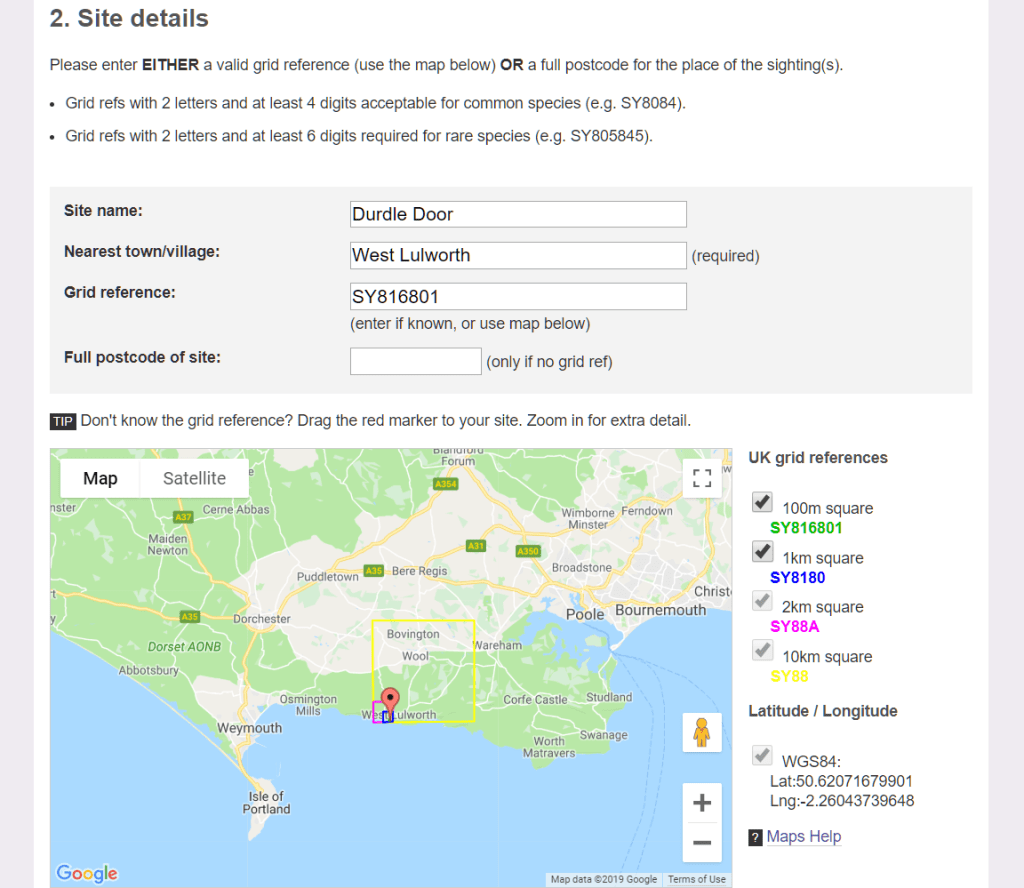
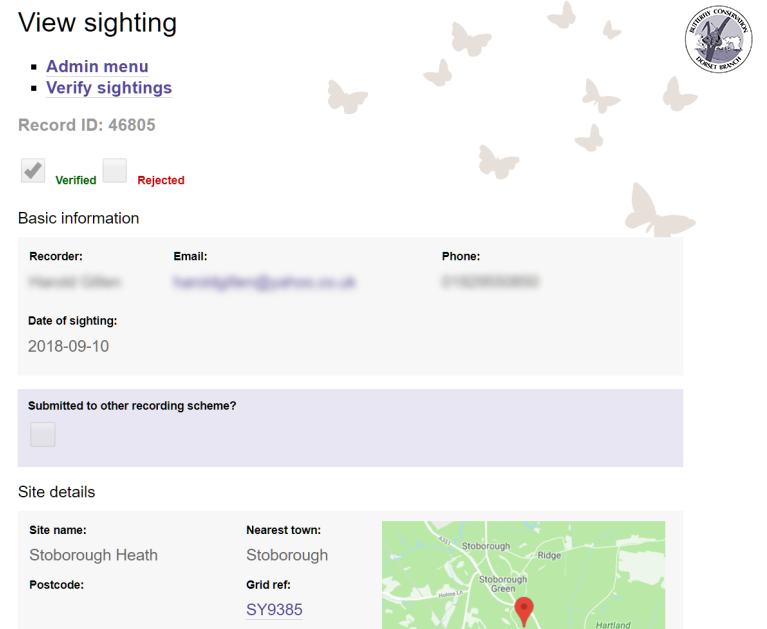
Butterfly spotters are directed to a web form which collects personal info, location details including grid reference, and species observed.

  • Butterfly recording form: site details

This information is then inserted into the Dorset Branch web sightings database.

Verify

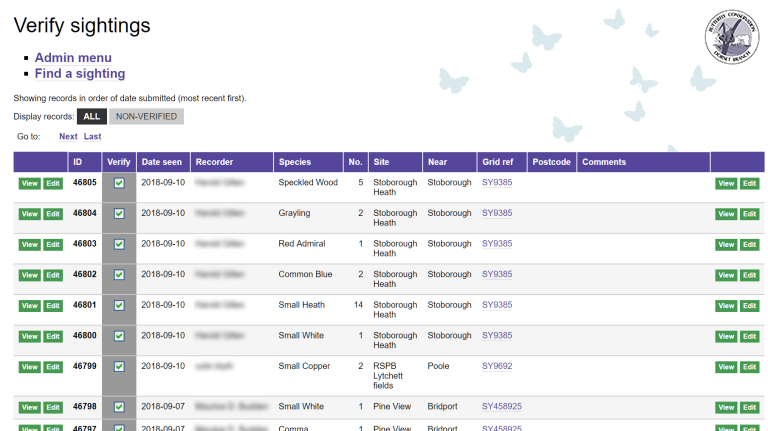
Local experts are given password-protected access to a record management interface on the branch website. Recently submitted butterfly sightings can be reviewed and verified with a single click.

dbc-recording-verify-01
Butterfly record verification

Questionable records can be studied in more detail and individuals contacted to clarify information as necessary.

Butterfly record management view

Interpret

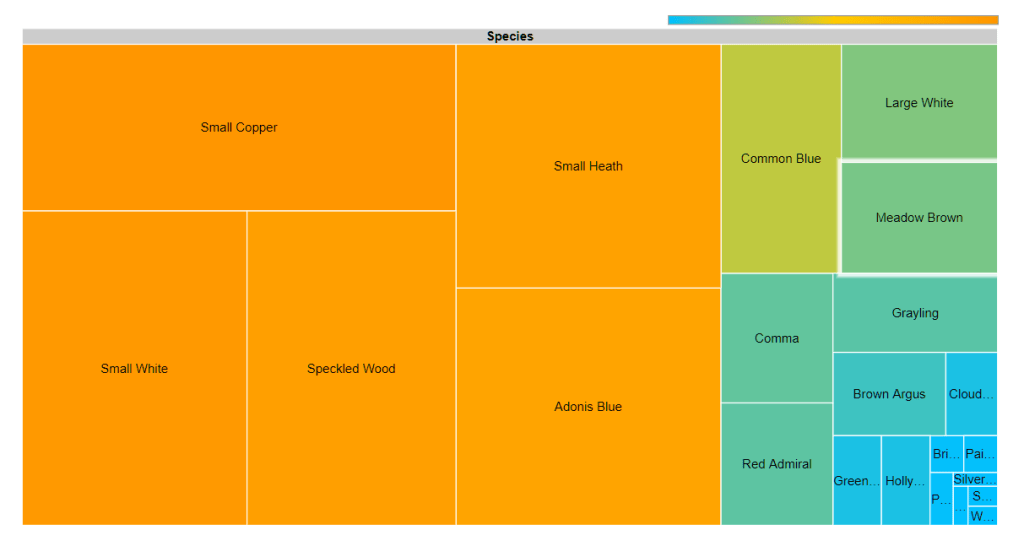
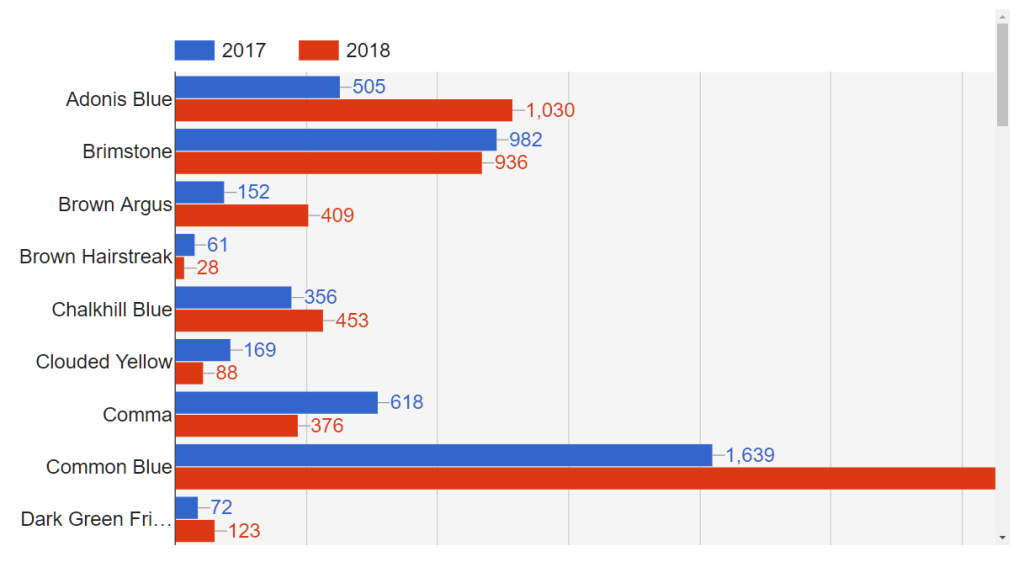
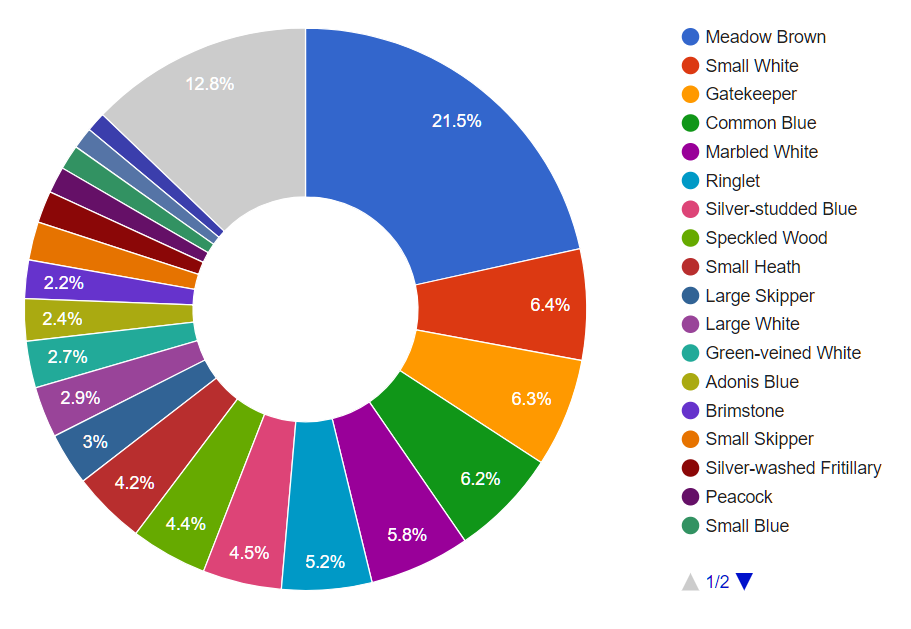
Verified records are instantly published to the branch website, using a number of graphical representations for easy interpretation.

  • Butterfly data: map
  • Butterfly data: tree chart
  • Butterfly data: calendar
  • Butterfly data: bar chart
  • Butterfly data: pie chart
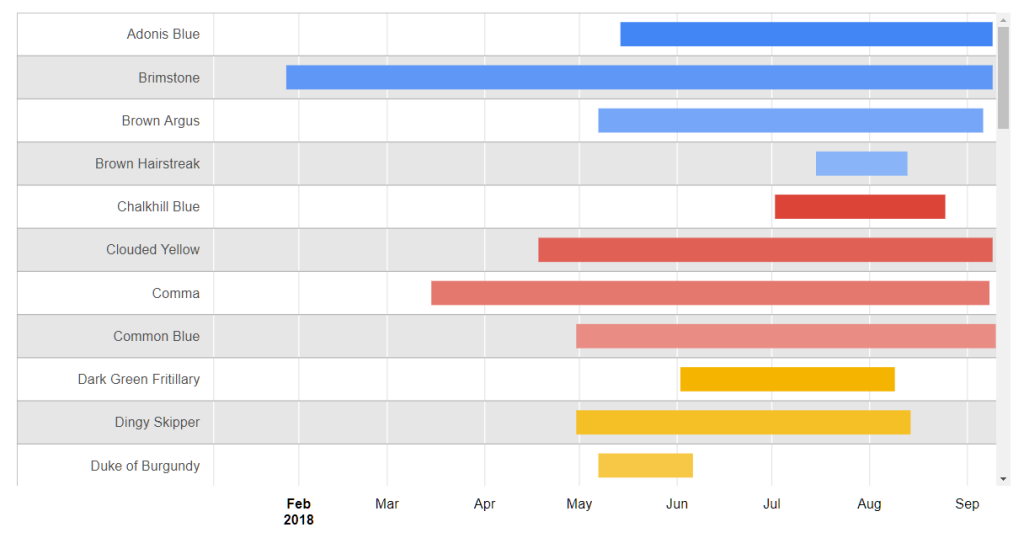
  • Butterfly data: Gantt chart

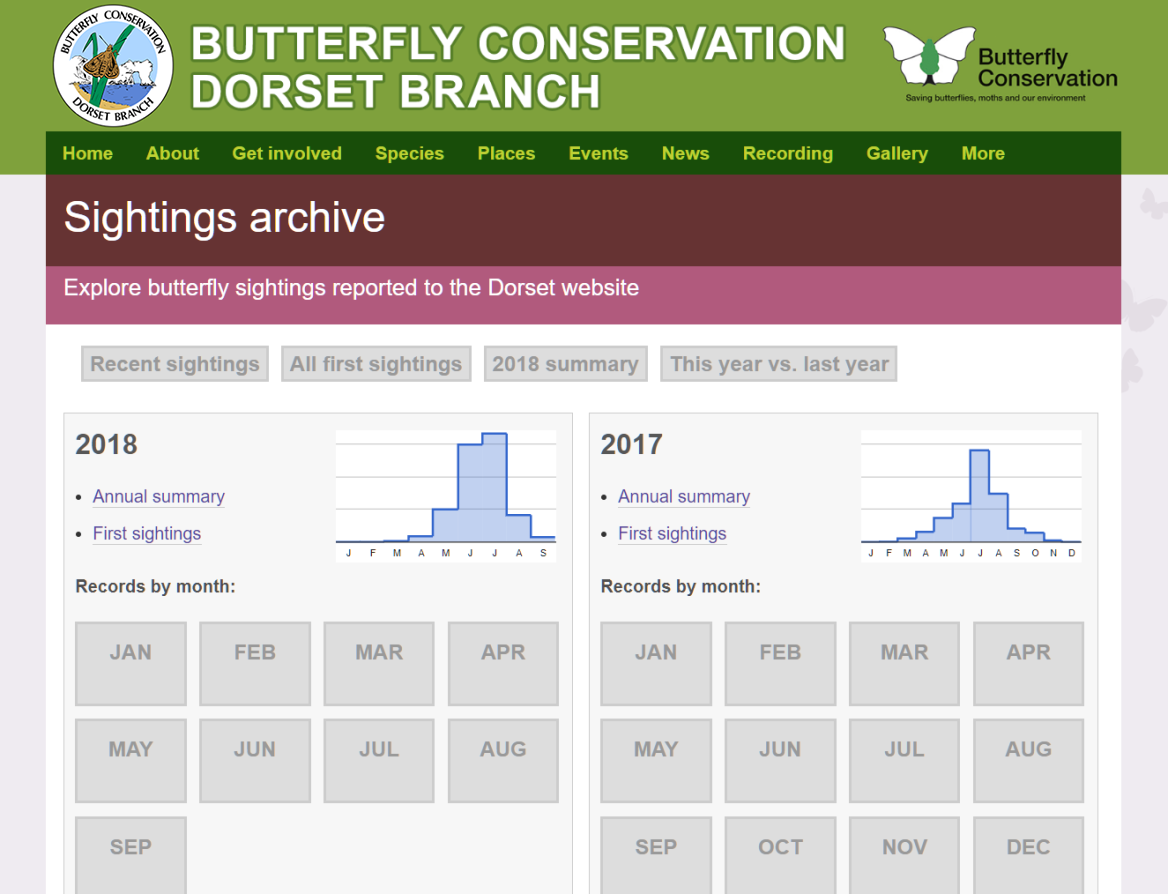
Archive

Butterfly sightings received via the website are archived online for the public to explore in greater depth.

dbc-recording-archive
Butterfly data: archive

Share

Casual sightings received via the branch website provide a useful snapshot of butterfly activity in Dorset, but for research purposes it’s necessary to combine them with data from formally structured butterfly transects, and other recording schemes within the region and nationally.

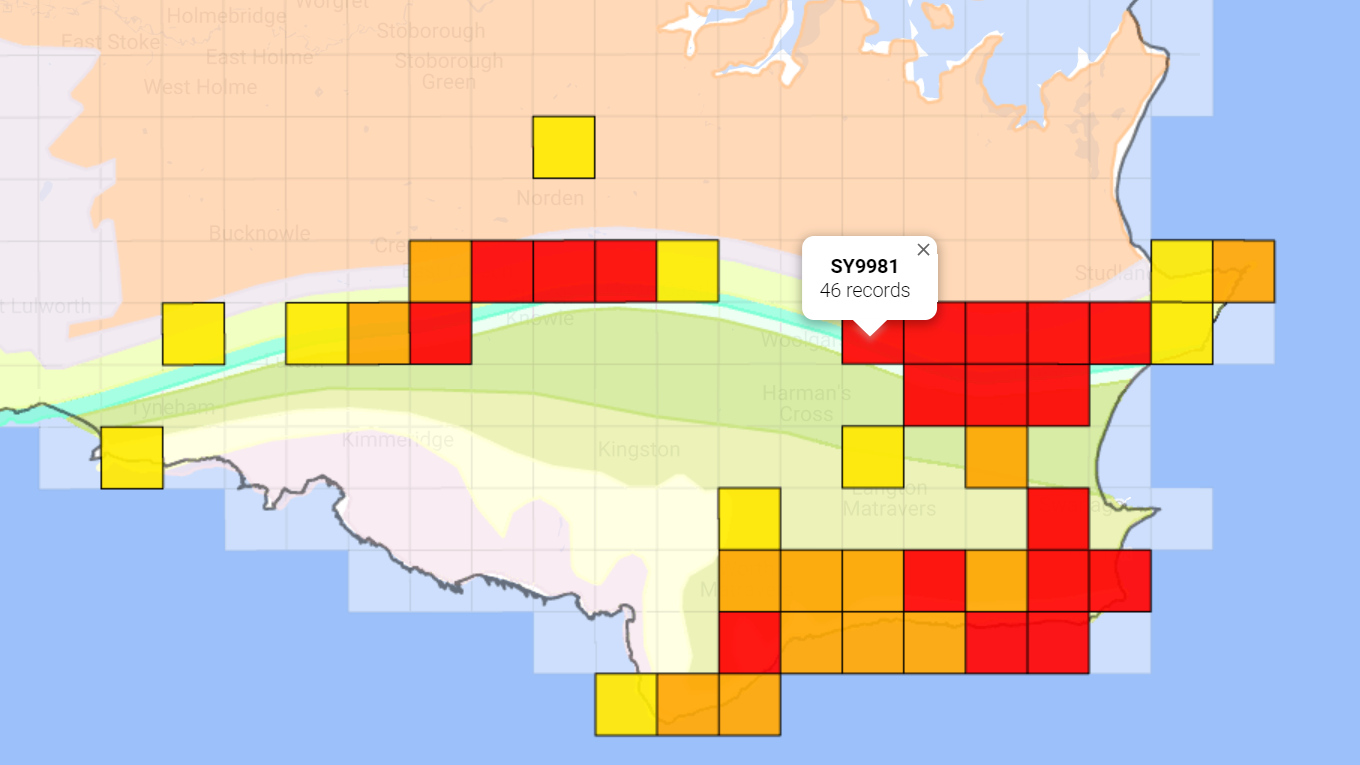
Website data is exported to the national society’s database annually. National butterfly recording cycles run for 5 years, at the end of which an ‘atlas’ is produced, showing the updated distribution of species and population trends.

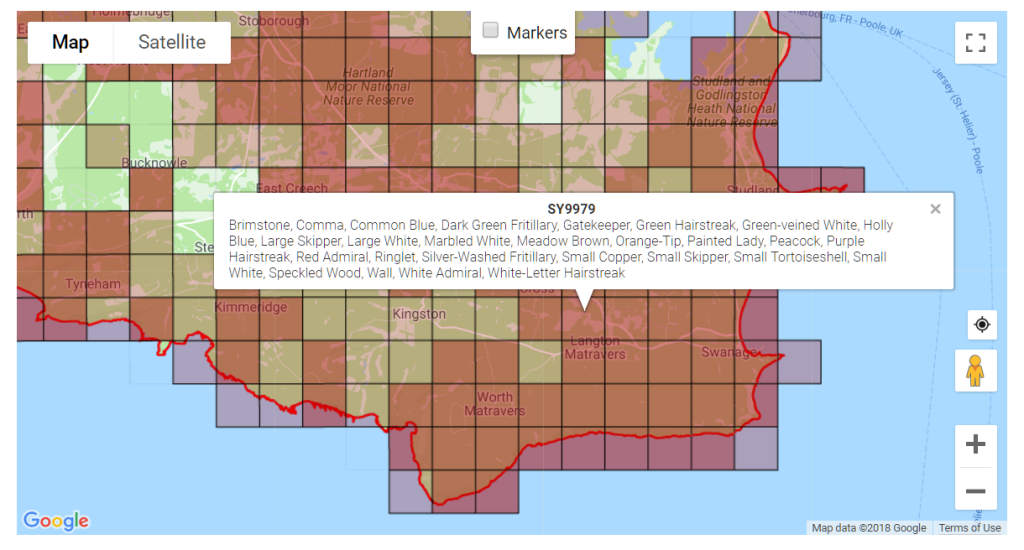
Adonis Blue distribution data superimposed on map revealing underlying geological strata

Coordinate

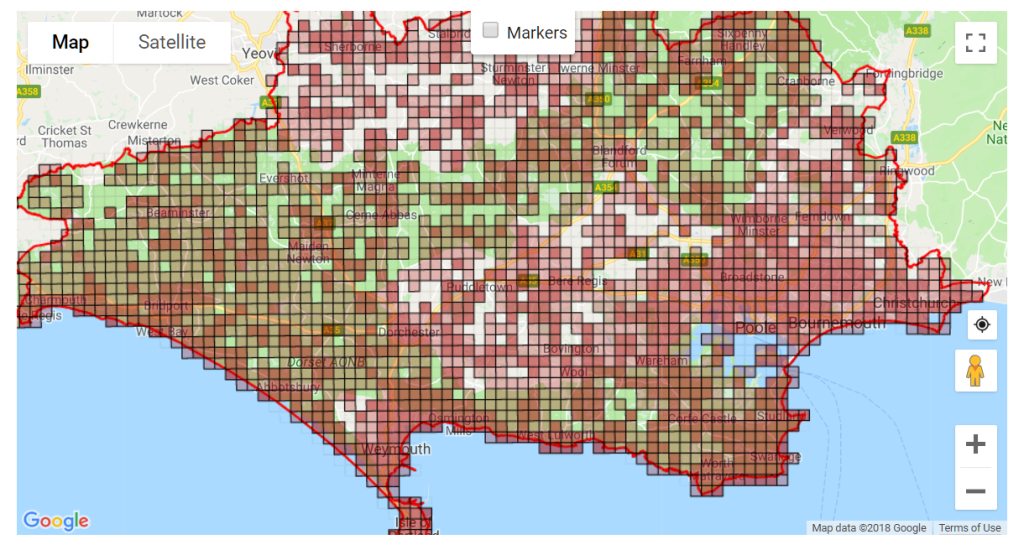
To encourage recording in under-represented areas an interactive ‘White Holes’ map is published on the branch website. This combines data from the national database with more up-to-date regional web sightings.

  • Butterfly data: White Holes map
  • Butterfly data: White Holes map detail

It’s possible to use this map on a GPS-enabled mobile device to locate the nearest White Hole for observation. A list of previously recorded species for each 1km square is also presented.

Spring Wood Ant Antics

Wood ant with heather seed
Wood ant (Formica rufa) foraging in early spring

The wood ant mounds among the pine trees were beginning to stir on my visit to the RSPB’s Arne reserve in Dorset recently.

Nests become active in early spring when worker ants begin to forage for food items and building materials to repair damage sustained over the winter months. Badgers, magpies, jays and other animals often raid wood ant nests for food.

Wood ant carrying twig
Wood ants are capable of carrying relatively heavy loads

Wood ant colonies can contain up to half a million individuals. On sunny days worker ants ‘sunbathe’ at the nest entrance to absorb heat and then re-enter the nest to release it – keeping it at a steady temperature. When the nest becomes too warm they open small vents to cool it down.

Wood ants at nest entrance
Sunbathing worker ants at nest entrance

The ants are particularly aggressive in springtime as they re-define their territories. Sometimes ants from weaker neighbouring colonies are recruited by force and carried back to the main colony.

Worker ant carrying another wood ant between nests

This species of wood ant is classified as Near Threatened (NT) in the IUCN Red List and classified in Great Britain as Local. Numbers seem to be increasing in the south of England but it has become locally extinct in parts of its former range in the north and east of England, the Midlands and north Wales.

Photographing ants is always a challenge because they’re small and they move very fast. It’s a good idea to keep your trousers tucked firmly into your socks when lying on the ground this close to a nest full of them! They will bite occasionally but can’t pierce skin. The formic acid they squirt in defence is too weak to harm humans.

Related links

Springwatched

Spider hunting wasp with spider

Spider hunting wasp with paralysed arachnid prey

The team at BBC’s ‘Springwatch Unsprung’ programme used a sequence of my photos to illustrate the intriguing behaviour of the spider-hunting wasp, Anoplius viaticus.

This solitary wasp targets spiders, which it paralyses with venom and then hauls back to its subterranean nest burrow. Once wrestled inside the female wasp will lay its eggs on the spider’s body for its larvae to eat when they hatch.

Bug expert Nick Baker explained that this species stores its prey before excavating the burrow and so the unattended spider often becomes the victim of a tug-of-war between Anoplius viaticus and other opportunistic wasps and ants.

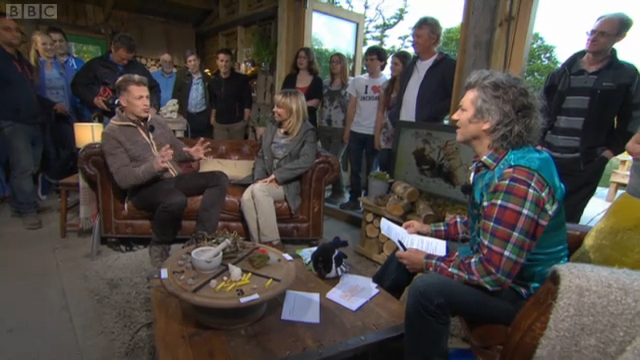
BBC Springwatch studio broadcast

Chris, Nick, Michaela, Martin and the Springwatch gang

Natural history superstar Mr. Chris Packham then related the curious fact that one of his first ever TV assignments was to film this invertebrate behaviour on nearby Studland Beach – this being made all the more awkward because it’s also frequented by enthusiastic naturists! Happily this particular site was a safe distance to the north on the peninsula. 🙂

Related links:

Dorset Life: Hunters

A selection of my images illustrates an article about predatory animals and plants in the May edition of Dorset Life magazine, out this month.

Dorset Life magazine

Dorset Life: Dorset Hunters. Double spread I

Dorset Life magazine

Dorset Life: Dorset Hunters. Double spread II

Featured flora and fauna include: the kestrel, adder, red fox, otter, sundew, kingfisher and hornet robberfly. Words by Joël Lacey.

Available now at all good newsagents and supermarkets in the Dorset area!

Related links:


RSPB Panels

Interpretation panels
Interpretation panels at RSPB Arne

The RSPB’s reserve at Arne in Dorset recently requested the use of my wetland wildlife photos for their new seasonal interpretation panels. They also commissioned a stitched panoramic landscape image to highlight landmarks visible from their stunning observation point overlooking Poole Harbour.

Featured above are the Southern Hawker dragonfly, Osprey, Wasp Spider, Raft Spider and Marsh Harrier, all of which can be found on the Arne reserve at different times of the year. Well worth a visit!

Raft Spider Life Cycle

Raft spider on pond surface

Raft spider on pond surface

You’d think that arachnids and water was an unhappy combination, but one species of European spider has made boggy ponds their home.

The raft spider (Dolomedes fimbriatus) is the UK’s largest native spider – its body growing up to 2cm long.

It uses the water’s surface like other spiders use their webs – feeling for the vibrations of potential prey with front legs extended. Using this technique it hunts tadpoles, insects and occasionally small fish:

Raft spider eating damselfly

Raft spider eating damselfly

When alarmed, the water repellent hairs on the raft spider’s legs enable it to dive beneath the water, trapping a bubble of air to keep it alive until the coast is clear and it cautiously re-emerges:

The wetland pools favoured by raft spiders are increasingly rare in this country. On the RSPB’s Arne reserve in Dorset their habitat is lovingly preserved, and offers wildlife watchers easy access from the nearby heathland trail:

Boggy pond habitat

Boggy pond habitat

On a good day dozens of raft spiders at various stages in their life cycle can be witnessed at the pond’s edge.

1. Sex

The female raft spider is often considerably larger than the male and mating is a dangerous business. He approaches her cautiously, waving his front legs tentatively to judge her receptiveness:

Male raft spider approaches female

Male raft spider approaches female at her den

She may rush out to scare him off on numerous occasions, after which she retreats and the process begins again, the male edging closer all the while. It’s a nerve jangling thing to watch, let alone participate in.

2. Birth

The female spins a silk bag to contain the fertilised eggs, which she carries about beneath her body, keeping it just warm and moist enough to ensure their survival:

Raft spider carrying egg sac

Raft spider carrying egg sac

Then, when the baby spiders are ready to hatch, she lashes the egg sac to vegetation at the edge of the pond and the tiny hatchlings emerge:

Baby raft spiders in nursery web

Baby raft spiders in nursery web

Mum typically lies in wait nearby to ensure that her young ones don’t come to any harm:

Raft spider guards her hatchlings

Raft spider guards her hatchlings

This phenomenon of hundreds of spiderlings crowded together for their own mutual safety is only really appreciated up close:

Raft spider hatchlings

Raft spider hatchlings closeup

But soon the young raft spiders are large enough to fend for themselves and disperse around the pond.

3. Death

Raft spiders are not fussy eaters. When times are tough and food is scarce, or when too many raft spiders compete for the same local resources, they may even turn to cannibalism:

Not such a pretty sight!

Related links:

Hen Harrier Fox Ambush

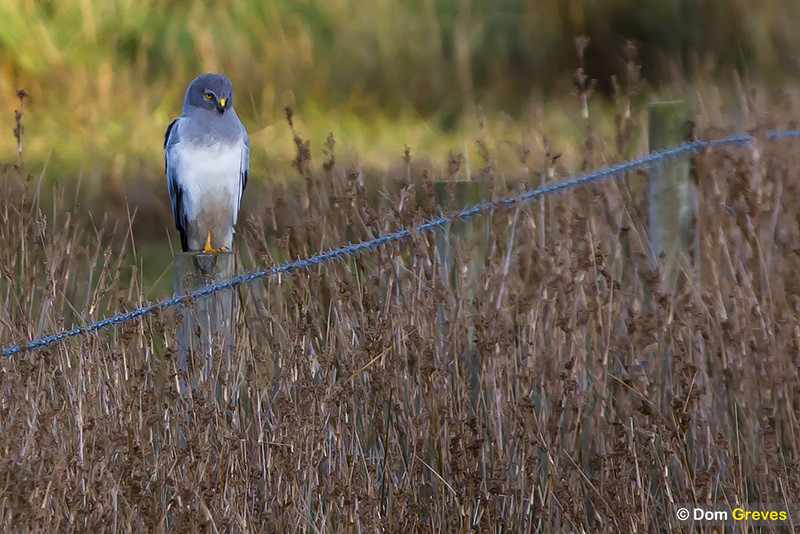
We’re lucky to have at least two male hen harriers overwintering on the shores of Poole Harbour this year. They’re visually quite distinct from the female hen harrier and other local raptors like the buzzard and marsh harrier. From a distance they might be mistaken for a gull as they patrol above the reed beds.

On this particular afternoon I’d been sat in a freezing hide at Middlebere overlooking a channel off the harbour with several other people. The male hen harrier passed the hide on 2 occasions as it hunted, and we were well pleased.

As the light began to fade and the temperature dropped so my companions began to leave. As dusk approached it was just me and my camera when this fella chose to alight on the neighbouring fenceline:

Hen harrier

I couldn’t quite believe my luck. It was clearly aware of my presence but seemed entirely unbothered. The bird continued to survey the reeds from its vantage point for some minutes. I hurriedly assembled my tripod and mounted the camera to switch to video mode. At which point this happened:

The harrier clearly spotted something edible in the reeds and swooped in to grab it. Either it missed, or the prey got away at the first attempt, but the harrier did not give up and flapped around after it in the reeds.

Seeing this grounded raptor the local fox recognised a golden opportunity and rushed in while its back was turned. Foxy must have come within a couple of feet of success. In the slow motion sequence you can see the harrier attempt to lift off, with the prey in its grasp, but gets snagged on the reeds with almost fatal delay. What appears to be a small mammal, probably a vole, then falls from its clutches as it finally gets airborne.

The slightly dejected, but still rather smug looking fox, then sauntered off right past the hide:

Fox

Wily fox walks away

Osprey Encounter

Ospreys are regular visitors to Poole Harbour in the autumn, on route to Africa where they flee for the winter. These birds are especially well adapted for catching fish and extraordinary to watch.

We’re very lucky to have such magnificent neighbours but I’m not sure that many inhabitants of nearby Poole and Bournemouth realise they exist, let alone where to find them.

The National Trust have a wildlife hide at Middlebere on the edge of a channel running into the harbour. It’s tucked away in the woods opposite the RSPB’s reserve at Arne. In season the ospreys can regularly be seen commuting up and down the channel on fishing expeditions. Great to watch through binoculars and scopes, but for photographic purposes they remain a long way off.

Having watched them from the hide on a few occasions I became familiar with a regular perch nearby. It looked accessible and there was decent cover nearby, so I determined to get closer.

On more than one occasion I observed ospreys perched in the branches of a dead tree after arriving on site. However ospreys are quite happy to spend hours sat in the same location and are difficult to approach. This was the closest I managed to get with a long lens without spooking the bird:

Osprey in dead tree
Perched osprey (Pandion haliaetus)

To get any closer I was going to have to get into position early one morning, before the birds became active, and wait for them to come to me. Several times I hid my gear nearby, tripod-mounted camera at the ready, and waited fruitlessly for a bird to appear.

On this particular occasion I was late to arrive and could see an osprey already in position.

Osprey perched in dead tree
Osprey (Pandion haliaetus) in dead tree

Having snapped a few long distance shots I might have turned back at this point but they’re beautiful birds to watch, even at a distance.

By the time I’d crept to the next viewing position the osprey had flown, but I seized the chance to scurry into position deep in the reeds, close to the dead tree perch, and hurriedly assembled tripod, camera and improvised camouflage. Pulling the reeds back over my head I settled in for what I thought might be another long, uneventful afternoon.

But within 20 minutes I saw a large bird flying in low over the reedbed. Through the binoculars I could make out a large wriggling shape in its grasp. It could only be a returning osprey!

I ducked down out of sight and watched the perch on the camera’s LCD monitor. Nothing. Wrong branch! Swivelling the lens to the left brought this majestic osprey into focus, a freshly caught bass pinioned in its enormous talons:

Osprey with bass
Osprey (Pandion haliaetus) with freshly caught bass

Over the next hour I was privileged to watch this mighty bird devouring its meal at close quarters, and captured some memorable stills and video footage in the process:

Canon 550D | Canon EF 100-400mm f4.5-5.6 L | Adobe Premiere Pro

The reedbed was enveloped in low cloud or mist and – together with the hissing sound of the reeds in the gathering wind – the conditions heightened an already surreal, unearthly atmosphere. Something I will never forget.