In the UK the rare Purbeck mason wasp (Pseudepipona herrichii) is found only in the Isle of Purbeck, Dorset.
The female excavates a nest burrow in bare ground on heathland and later seals it with moistened clay.
Purbeck mason wasp (Pseudepipona herrichii) excavating nest burrow on heathland. Dorset, UK.
She stocks her burrow with the larvae of a small moth which feeds mainly on bell heather.
Purbeck mason wasp (Pseudepipona herrichii) with Acleris hyemana moth larva prey at nest burrow entrance. Dorset, UK.
The adults chew distinctive holes in the heather flowers to obtain nectar which their short tongues could not otherwise reach.
Purbeck mason wasp male nectaring on bell heather. Dorset, UK.
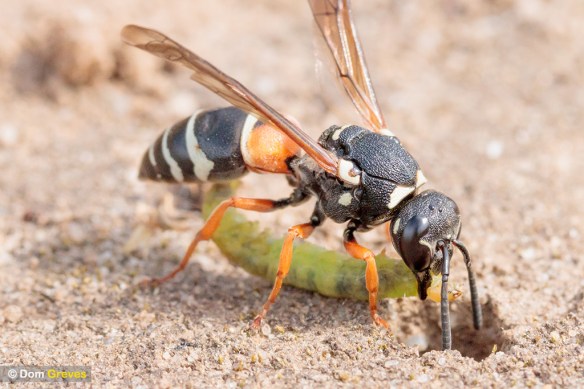
The Purbeck mason wasp is thought to rely solely on the larvae of Acleris hyemna, but in 2017 I photographed this female provisioning her nest with what appears to be the moth Acleris notana.
Purbeck mason wasp (Pseudepipona herrichii) with moth larva prey (Acleris notana?) at nest burrow entrance. Dorset, UK.
Advancing conservation science through public engagement on digital platforms
Working for the Dorset branch of Butterfly Conservation I developed an online system to document sightings of butterflies submitted by members of the public. This ‘citizen science’ project encourages engagement in nature conservation and adds to our knowledge of these important environmental indicator species.
Since 2014 this recording system has gathered more than 700,000 individual adult butterfly sightings, contributing to our understanding of these beautiful creatures and the changing world we inhabit.
700,000+ individual butterfly sightings
Capture
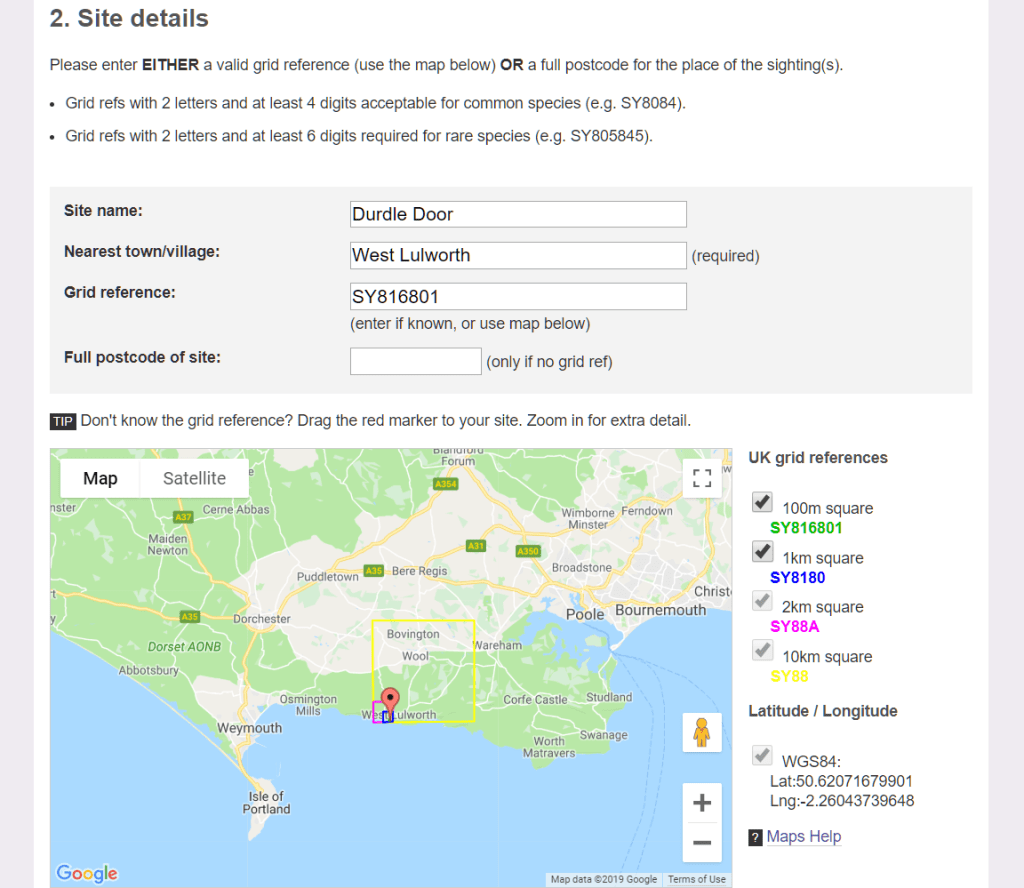
Butterfly spotters are directed to a web form which collects personal info, location details including grid reference, and species observed.
Butterfly recording form: recorder info
Butterfly recording form: site details
This information is then inserted into the Dorset Branch web sightings database.
Verify
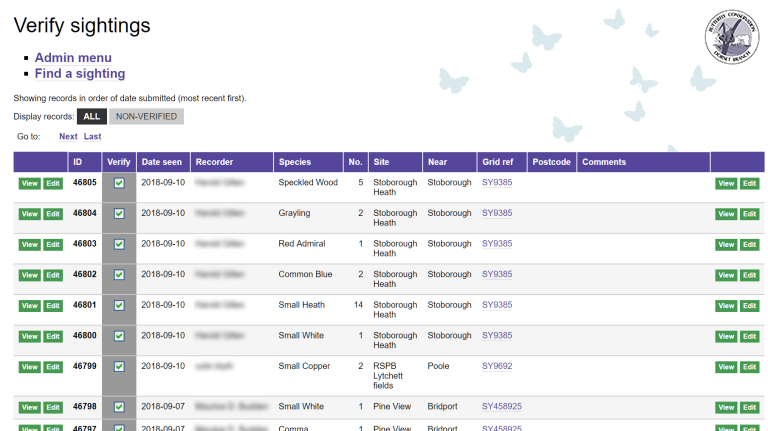
Local experts are given password-protected access to a record management interface on the branch website. Recently submitted butterfly sightings can be reviewed and verified with a single click.
Butterfly record verification
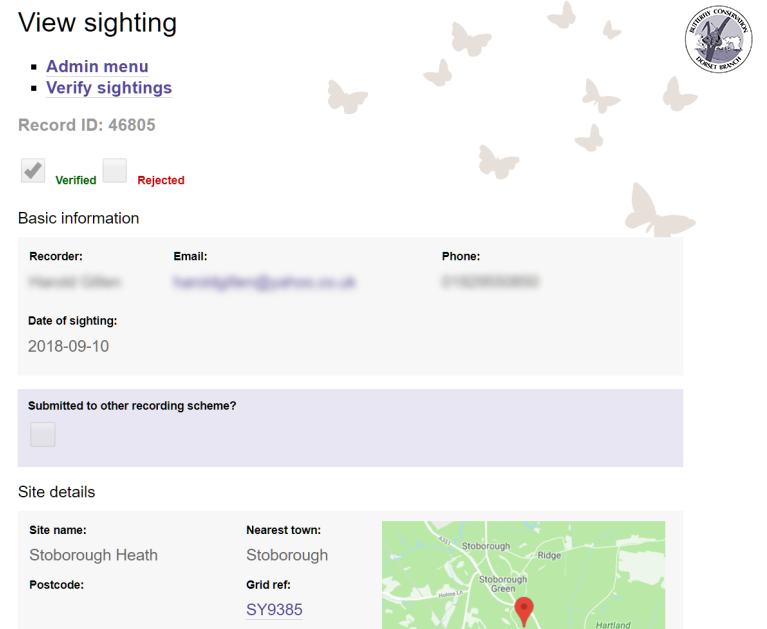
Questionable records can be studied in more detail and individuals contacted to clarify information as necessary.
Butterfly record management view
Interpret
Verified records are instantly published to the branch website, using a number of graphical representations for easy interpretation.
Butterfly data: map
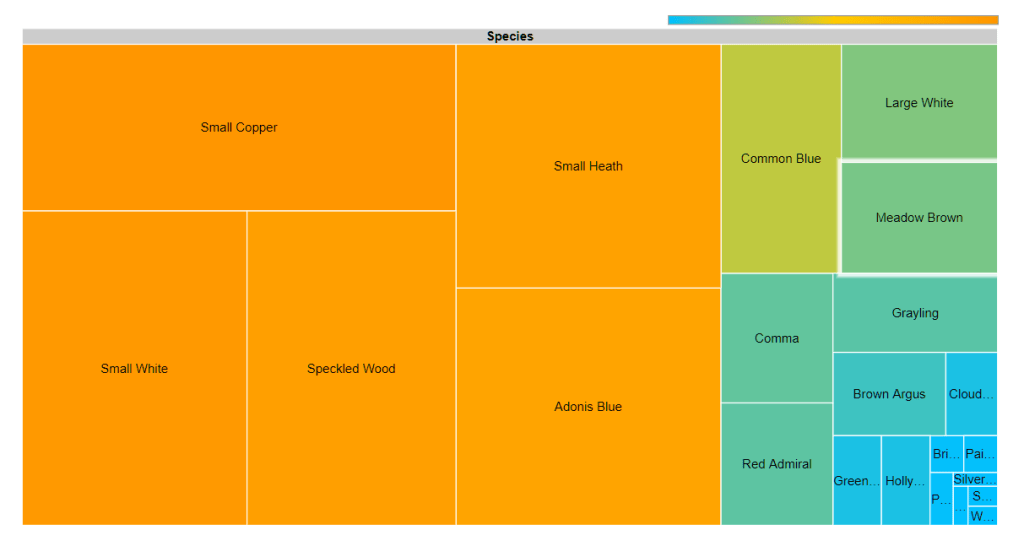
Butterfly data: tree chart
Butterfly data: calendar
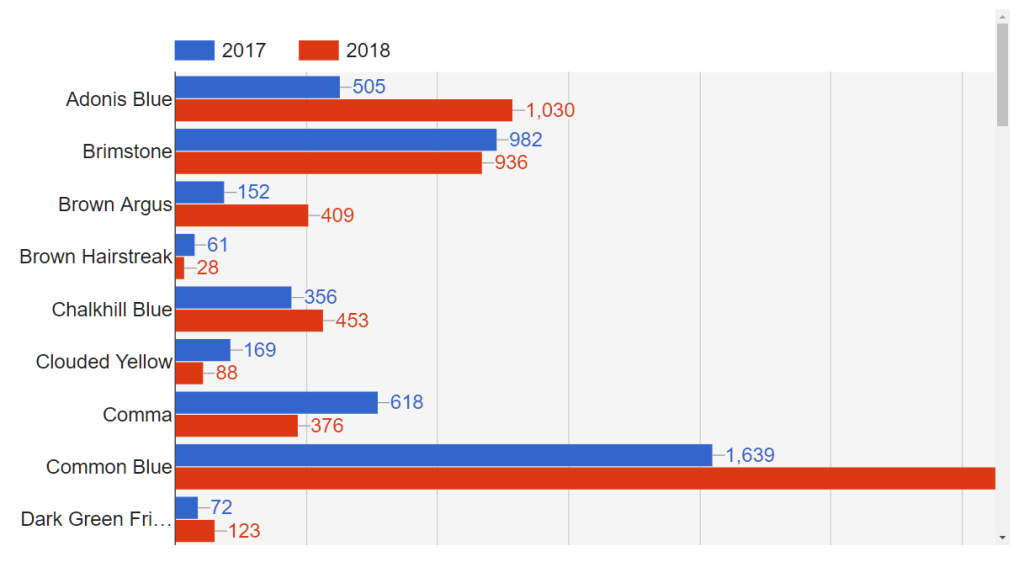
Butterfly data: bar chart
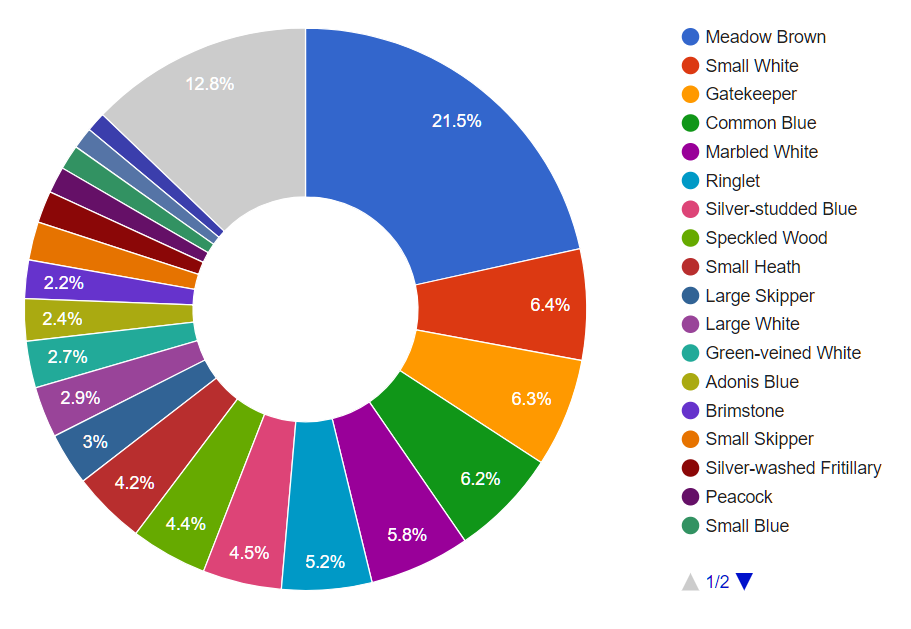
Butterfly data: pie chart
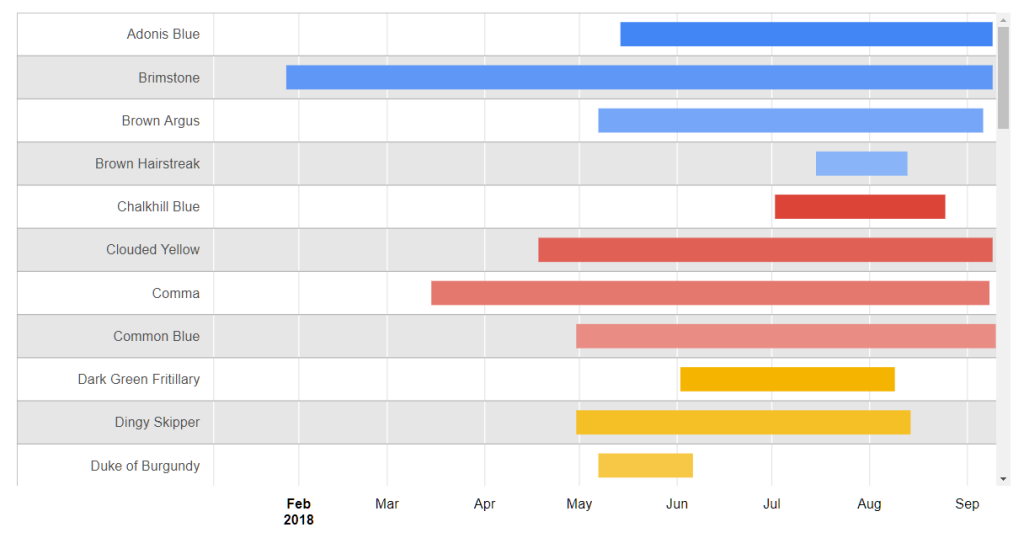
Butterfly data: Gantt chart
Archive
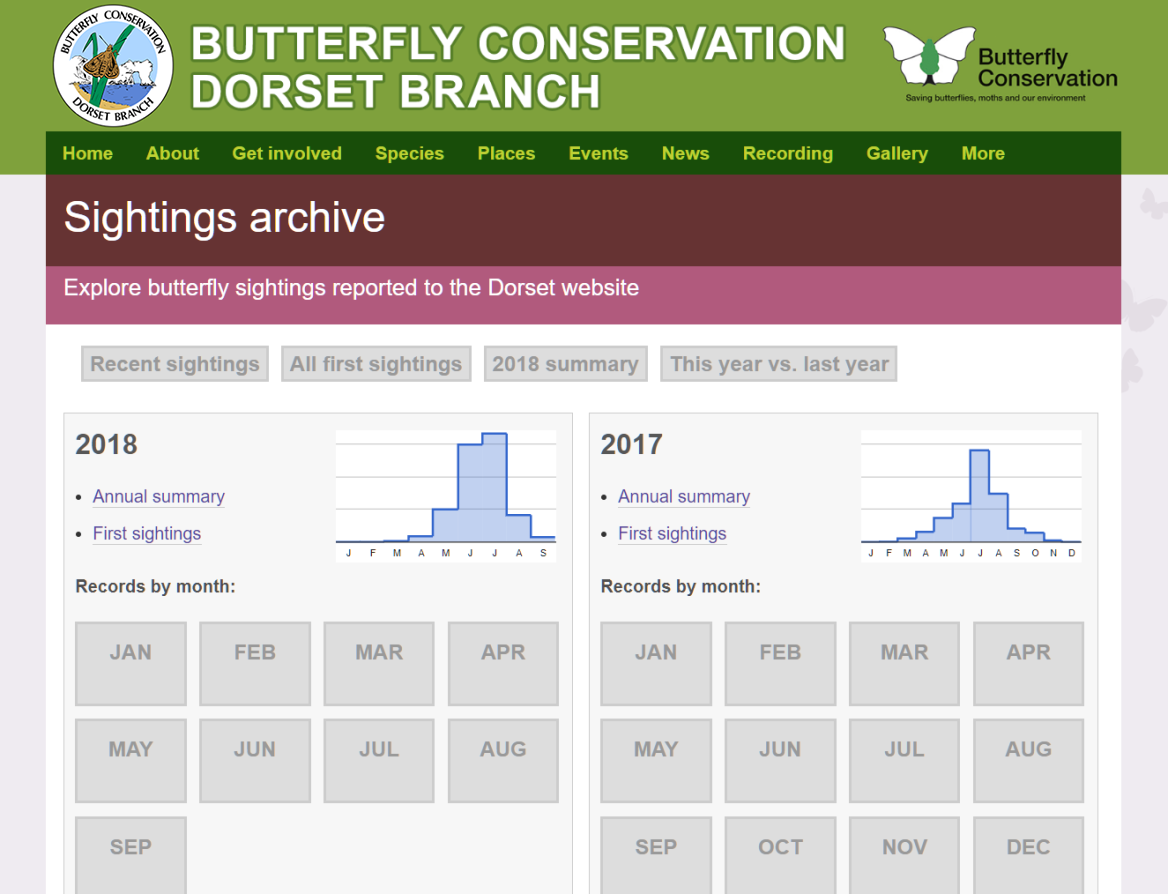
Butterfly sightings received via the website are archived online for the public to explore in greater depth.
Butterfly data: archive
Share
Casual sightings received via the branch website provide a useful snapshot of butterfly activity in Dorset, but for research purposes it’s necessary to combine them with data from formally structured butterfly transects, and other recording schemes within the region and nationally.
Website data is exported to the national society’s database annually. National butterfly recording cycles run for 5 years, at the end of which a Butterfly Atlas for Dorset is produced, showing the updated distribution of species and population trends.
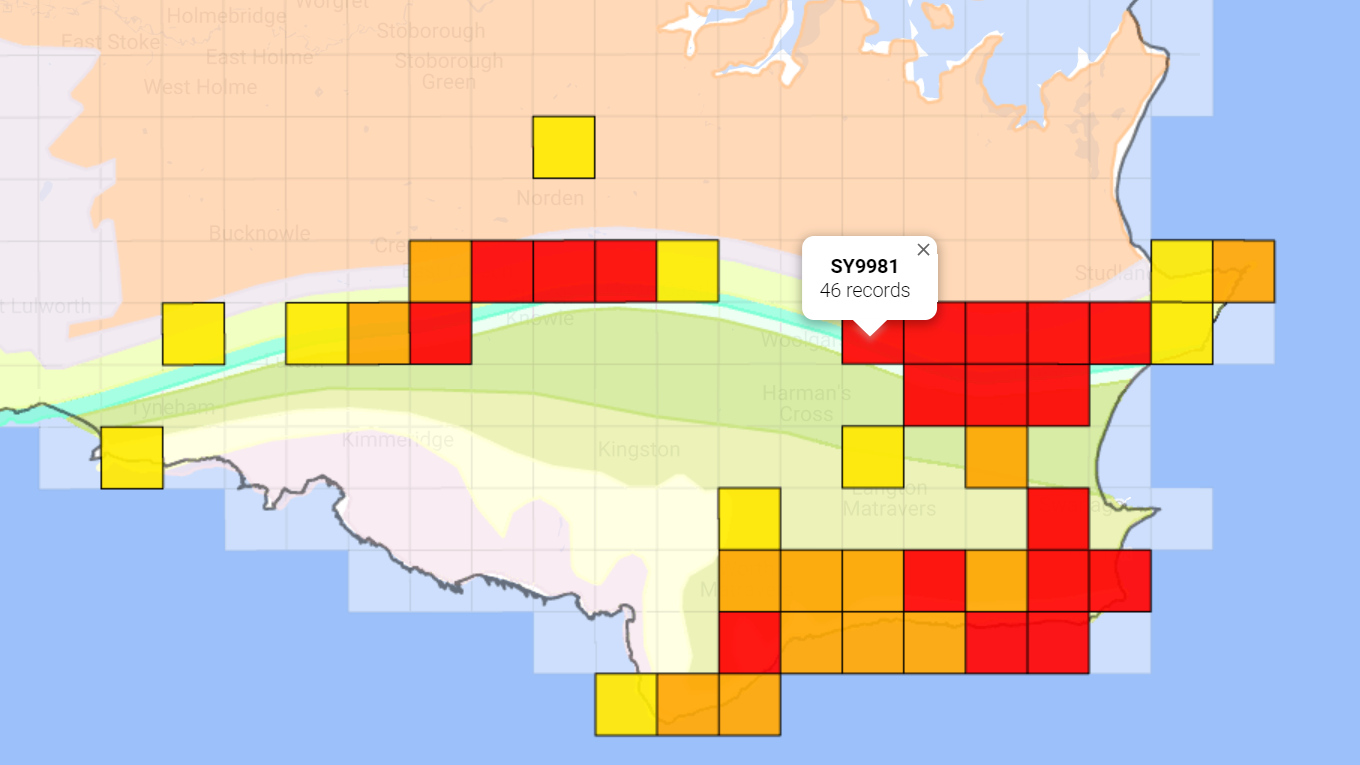
Adonis Blue distribution data superimposed on map revealing underlying geological strata
Coordinate
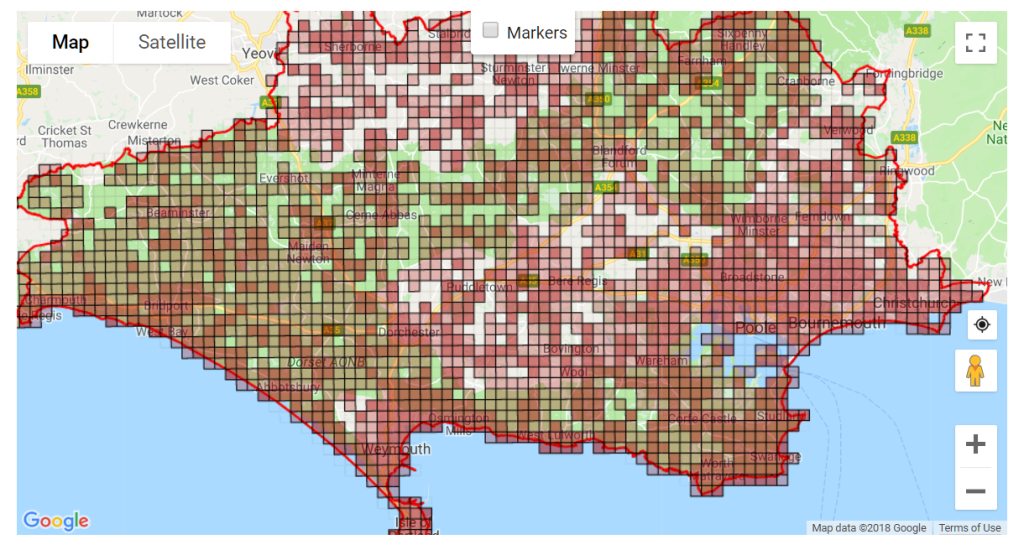
To encourage recording in under-represented areas an interactive ‘White Holes’ map is published on the branch website. This combines data from the national database with more up-to-date regional web sightings.
Butterfly data: White Holes map
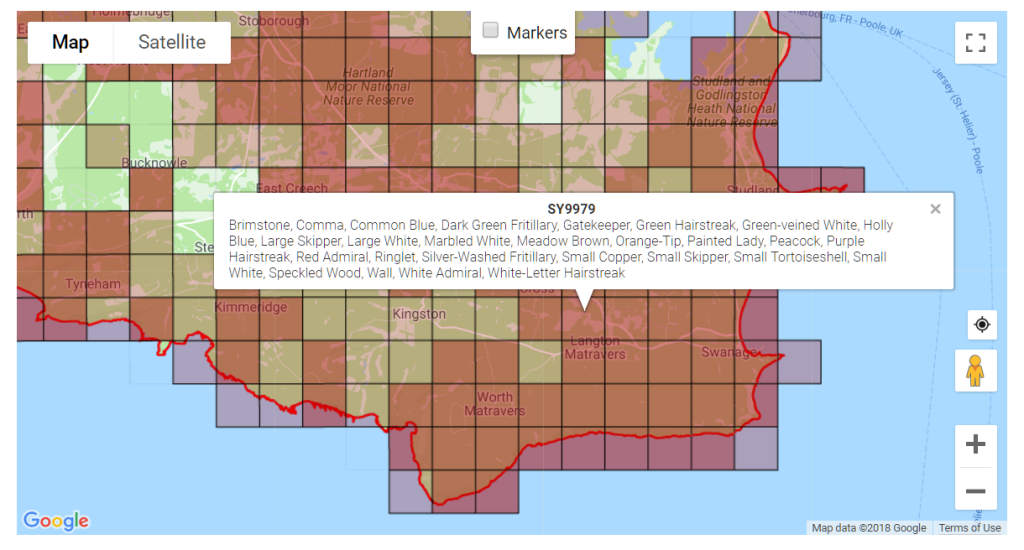
Butterfly data: White Holes map detail
It’s possible to use this map on a GPS-enabled mobile device to locate the nearest White Hole for observation. A list of previously recorded species for each 1km square is also presented.
Open Air Laboratories (OPAL) was a UK-wide citizen science initiative which ran from 2007 – 2019, enabling people to get hands-on with nature while contributing to important scientific research. It was funded by the Big Lottery Fund and led by Imperial College London, in collaboration with Natural History Museum, Open University and Field Studies Council, supported by a network of Community Scientists.
OPAL designed a collection of field and desk-based activities suitable for all ages, abilities and backgrounds. It launched a series of national ecological surveys with activities intended to increase understanding of the natural environment, through data collection covering wildlife and habitat conditions.
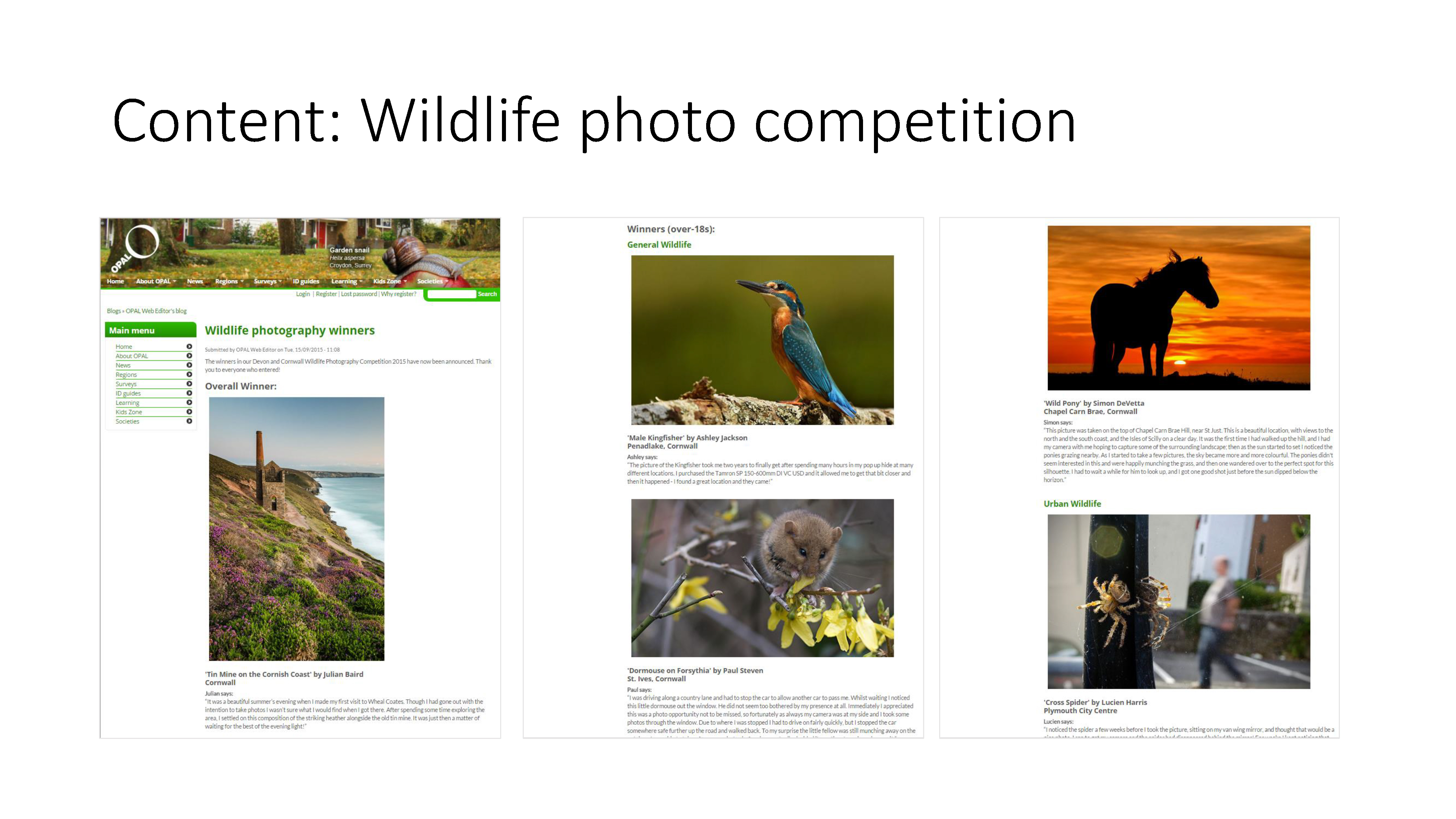
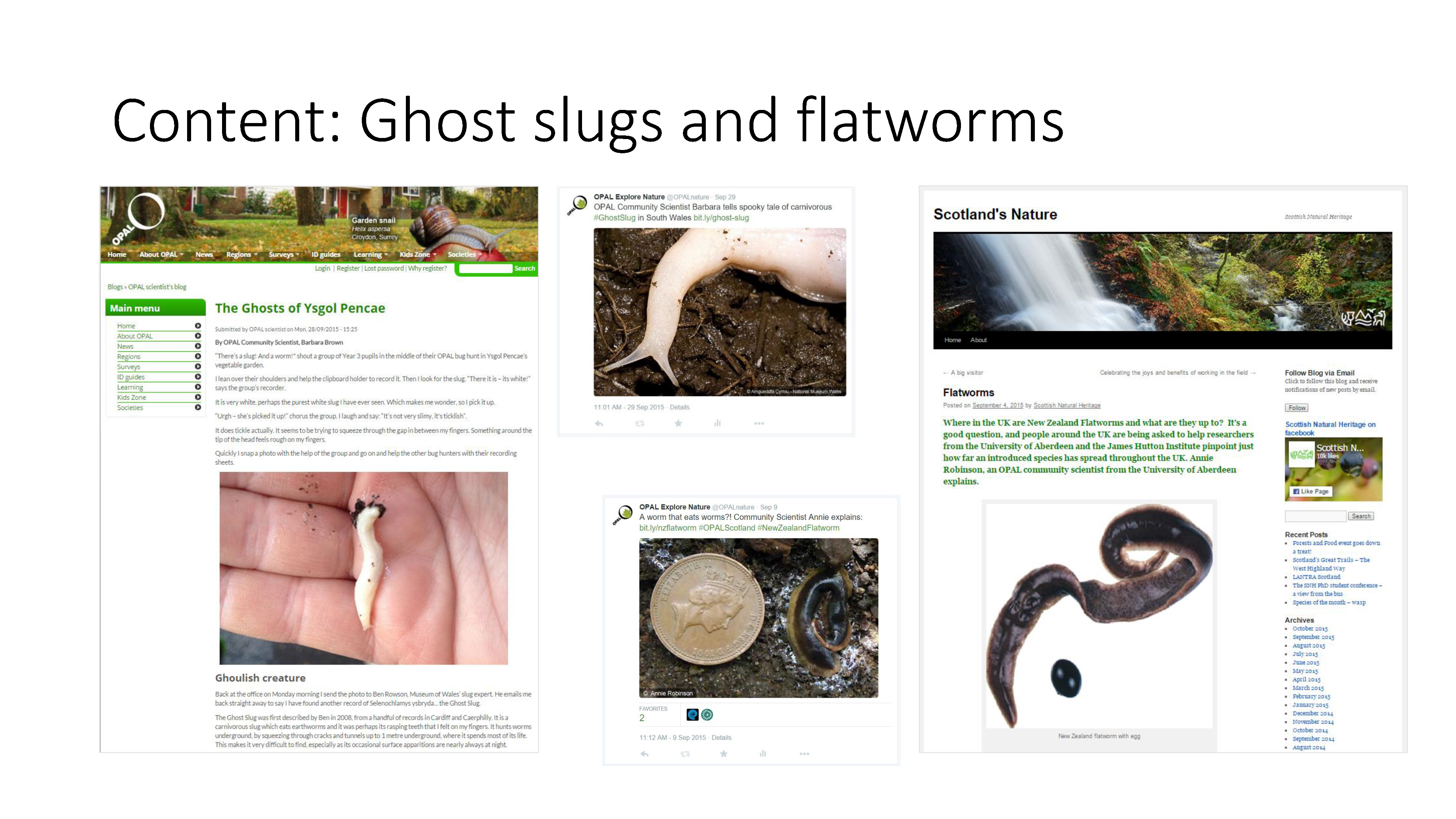
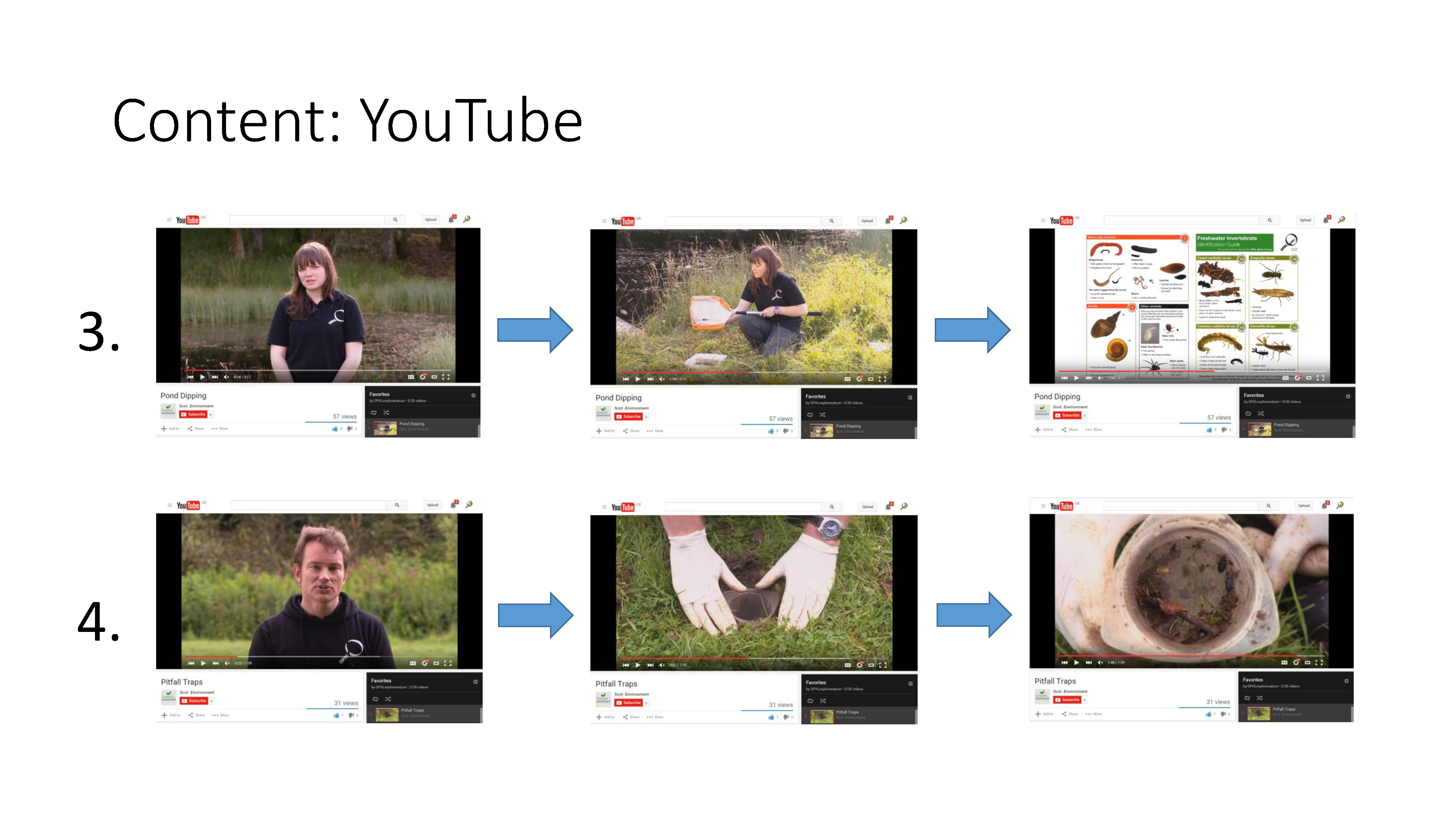
I worked at OPAL from 2015 – 2016 as their Web and Digital Manager. OPAL’s successes included:










 Dom Greves Digital / Blog