Purse Web Spider: Britain’s Tarantula

Meet our amazing mygalomorph, discover its life cycle and learn how to find it

The scarce Purse Web Spider (Atypus affinis) is rarely seen because it spends the majority of its life underground in a sock-shaped tube. In the UK it has the honour of being our only member of the mygalomorph family, which elsewhere includes tarantulas.

Male Purse Web Spider (Atypus affinis) on heathland. Dorset, UK.

Purse Web Spiders normally lead a solitary existence in a silk-lined burrow. The top portion of this tube extends above ground and is extremely well camouflaged with its surroundings, covered with bits of vegetation and debris. Most of the time this tube is completely sealed.

Camouflaged web of Purse Web Spider (Atypus affinis) on heathland. Surrey, UK.
Female Purse Web Spider (Atypus affinis) female in tube web. Sussex, UK.

When the Purse Web Spider’s prey makes contact with the exposed section of burrow the spider senses its vibrations and bites through the silk with its huge fangs. These distinctive downward-facing ‘chelicerae’ are shared with its larger, more exotic, arachnid ancestors. The fangs of more modern spiders cross over.

Male Purse Web Spider (Atypus affinis) on heathland. Dorset, UK.

In spring and autumn each year male Purse Web Spiders leave their burrows to go wandering in search of females. This is when you are most likely to find an adult spider. If successful in his quest he tears an entrance in her silk tube and, after mating, the pair will live here together for a while.

In early spring each year juvenile Purse Web Spiders exit the nest burrow and climb surrounding vegetation. They weave thick lines of silk to aid dispersal, and build tent-like structures around which they initially congregate.

Purse Web spiderlings (Atypus affinis) dispersing. Surrey, UK.
Purse Web spiderlings (Atypus affinis) create silk rigging. Surrey, UK.

Locating this silk rigging is a good indication that an adult’s burrow is nearby. Look out for it at the top of low gorse or heather on heathland in the south of England from mid-March. This species can also be found on chalk grassland.

Silk tents constructed by Purse Web spiderlings (Atypus affinis) on heathland. Surrey, UK.

In the aftermath of heath fires, discarded sections of Purse Web tubes become more visible. Heat damages the surface layer of camouflage, exposing brighter silk beneath.
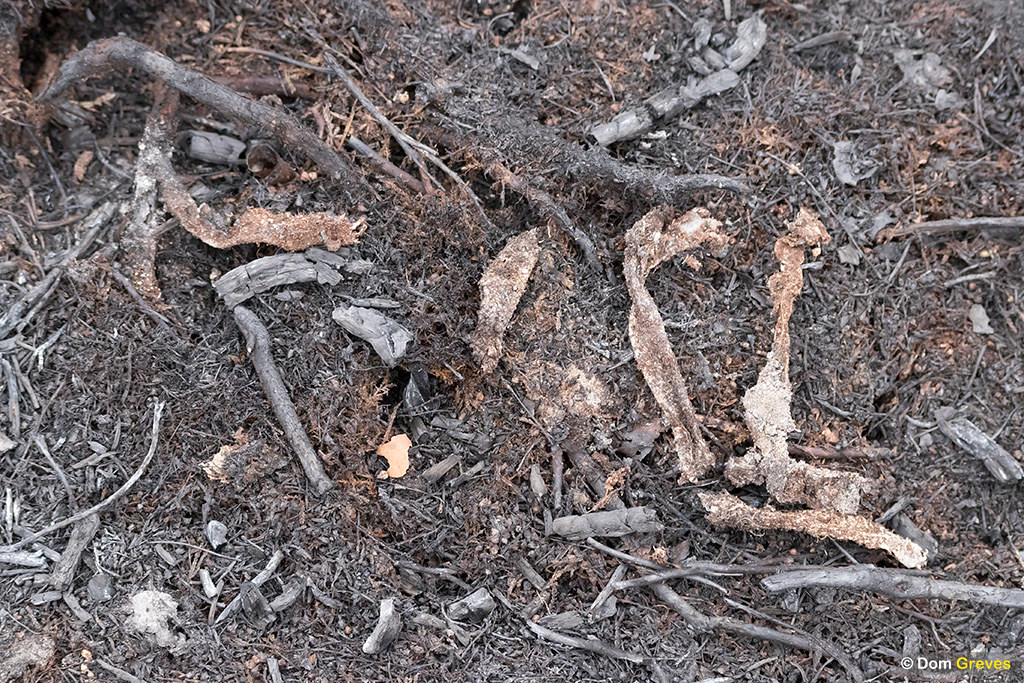
Discarded Purse Web Spider (Atypus affinis) tube webs on burnt heathland. Surrey, UK.
Discarded Purse Web Spider (Atypus affinis) tube webs recovered from burnt heathland. Surrey, UK.

The Purse Web Spider is classified as Nationally Scarce and is Amber Listed. Although it remains widespread, the species has undergone substantial decline. However there is limited data available and so the British Arachnological Society (BAS) has launched a new Purse Web Spider Recording Scheme using iRecord. If you find one of these amazing creatures please be sure to let them know!

Find out more

Raft Spider Life Cycle

Raft spider on pond surface

Raft spider on pond surface

You’d think that arachnids and water was an unhappy combination, but one species of European spider has made boggy ponds their home.

The raft spider (Dolomedes fimbriatus) is the UK’s largest native spider – its body growing up to 2cm long.

It uses the water’s surface like other spiders use their webs – feeling for the vibrations of potential prey with front legs extended. Using this technique it hunts tadpoles, insects and occasionally small fish:

Raft spider eating damselfly

Raft spider eating damselfly

When alarmed, the water repellent hairs on the raft spider’s legs enable it to dive beneath the water, trapping a bubble of air to keep it alive until the coast is clear and it cautiously re-emerges:

The wetland pools favoured by raft spiders are increasingly rare in this country. On the RSPB’s Arne reserve in Dorset their habitat is lovingly preserved, and offers wildlife watchers easy access from the nearby heathland trail:

Boggy pond habitat

Boggy pond habitat

On a good day dozens of raft spiders at various stages in their life cycle can be witnessed at the pond’s edge.

1. Sex

The female raft spider is often considerably larger than the male and mating is a dangerous business. He approaches her cautiously, waving his front legs tentatively to judge her receptiveness:

Male raft spider approaches female

Male raft spider approaches female at her den

She may rush out to scare him off on numerous occasions, after which she retreats and the process begins again, the male edging closer all the while. It’s a nerve jangling thing to watch, let alone participate in.

2. Birth

The female spins a silk bag to contain the fertilised eggs, which she carries about beneath her body, keeping it just warm and moist enough to ensure their survival:

Raft spider carrying egg sac

Raft spider carrying egg sac

Then, when the baby spiders are ready to hatch, she lashes the egg sac to vegetation at the edge of the pond and the tiny hatchlings emerge:

Baby raft spiders in nursery web

Baby raft spiders in nursery web

Mum typically lies in wait nearby to ensure that her young ones don’t come to any harm:

Raft spider guards her hatchlings

Raft spider guards her hatchlings

This phenomenon of hundreds of spiderlings crowded together for their own mutual safety is only really appreciated up close:

Raft spider hatchlings

Raft spider hatchlings closeup

But soon the young raft spiders are large enough to fend for themselves and disperse around the pond.

3. Death

Raft spiders are not fussy eaters. When times are tough and food is scarce, or when too many raft spiders compete for the same local resources, they may even turn to cannibalism:

Not such a pretty sight!

Related links: